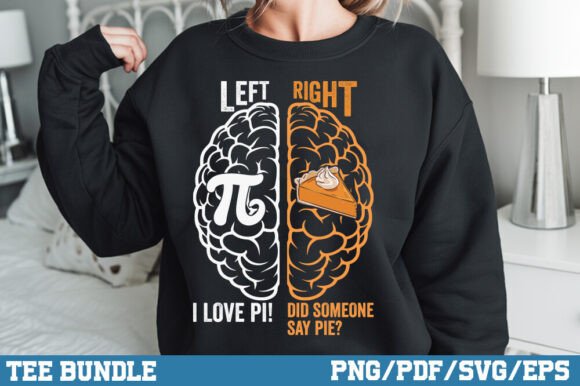
Pi Day Left Vs Right Brain Pie Shirt: Integrating Mathematical Humor into Your Creative Workflow
In the intersection of academic celebration and commercial design, few concepts capture attention quite like the Pi Day Left Vs Right Brain Pie Shirt. This specific design serves as a perfect example of how niche mathematical humor can be transformed into a versatile asset for creators, educators, and small business owners. The concept relies on a clever juxtaposition: the left side features "I Love Pi," appealing to the logical, analytical mind, while the right side reads "Did Someone Say Pei," targeting the creative, phonetic, or humorous interpretation. Understanding how this graphic functions allows professionals to integrate it effectively into broader marketing strategies, educational materials, or product lines without feeling forced.
The true value of this design lies not just in the joke, but in the technical execution that makes it usable across various platforms. For entrepreneurs and marketers planning a campaign around March 14th, having a high-quality, editable source file is critical. It shifts the process from simply downloading an image to actively managing a brand asset. When you acquire the Pi Day Left Vs Right Brain Pie Shirt package, you are not just getting a picture; you are receiving a toolkit designed for scalability and adaptability. This distinction is vital for anyone who needs to maintain visual consistency while expanding their reach across different mediums.
Technical Specifications as a Foundation for Execution
Before diving into application strategies, one must consider the foundational elements of the asset itself. The package includes four distinct file formats: a print-ready PNG at 4500×5400 resolution with 300 dpi, an editable EPS 10 vector file, an SVG file, and a PDF document. Each format serves a specific role in the production workflow, ensuring that the final output remains crisp regardless of the medium.
- PNG Files: The 300 dpi transparent PNG is the immediate go-to for quick mockups or digital advertising. Its high resolution ensures that text like "I Love Pi" and "Did Someone Say Pei" remains legible even when scaled down for social media avatars or phone covers.
- EPS and SVG Files: These are the workhorses of the collection. Made with 100 vector shapes, they allow for infinite resizing without pixelation. For a designer preparing a large-format poster or a detailed embroidery pattern for a hoodie, these files provide the necessary control over color and geometry.
- PDF Files: Serving as a bridge between vector and raster, the PDF offers a standardized view for proofing designs before sending them to a printer.
This variety eliminates the common bottleneck where a creator finds a great design only to realize they cannot modify the colors or resize it for a specific t-shirt size. By starting with editable vector files, you retain the ability to change the hue to match a brand palette or adjust the layout to fit a mug's curvature. This flexibility is essential for maintaining professional standards in any commercial venture.
Strategic Integration Across Product Lines
Once the technical assets are secured, the next phase involves deciding where and how to deploy the Pi Day Left Vs Right Brain Pie Shirt design. The versatility of the file types means it can seamlessly transition from a digital invitation to a physical merchandise item. Consider the lifecycle of a typical product launch: preparation, production, and distribution.
In the preparation stage, the SVG and EPS files allow you to create prototypes quickly. You might test different background colors to see which resonates better with your target audience before committing to a full print run. This iterative process saves money and reduces waste, a key consideration for small business owners and freelancers working with tight budgets. If you are a teacher looking to create classroom rewards, the ease of modifying the file means you can personalize the design for different grade levels or subjects.
During the production phase, the high-resolution PNG ensures that the quality transfer to sublimation printers or direct-to-garment machines is flawless. Whether you are printing on a ceramic mug, a fabric hoodie, or a vinyl sticker, the 300 dpi standard guarantees sharp edges and vibrant colors. The design's clean lines and clear typography make it particularly suitable for items with limited surface area, such as phone covers or tote bags, where cluttered graphics often fail to communicate effectively.
Targeting Specific Audiences Through Design Logic
The narrative within the design itself—contrasting the love for the mathematical constant with the playful mishearing of "Pie"—offers a unique opportunity to segment your audience. The "Left Brain" element appeals directly to engineers, data analysts, and math teachers who appreciate precision and logic. For these professionals, wearing or displaying this shirt signals a shared identity and intellectual camaraderie.
Conversely, the "Right Brain" or "Pei" element acts as a hook for creatives, hobbyists, and general audiences who enjoy wordplay and humor. This duality makes the design a powerful tool for cross-promotion. A marketing campaign can leverage the mathematical aspect to engage STEM communities while using the pun to attract a broader demographic on social media platforms. By understanding this dynamic, you can tailor your messaging. For instance, an email blast to a math club might focus on the accuracy of the symbol, while a post on Instagram could highlight the funny typo as a conversation starter.
This approach aligns well with modern content strategies that rely on relatability. Instead of a generic "Happy Pi Day" message, the specific interaction between the two sides of the brain creates a story. It invites the viewer to pause and think, increasing engagement rates. For bloggers and publishers, this depth provides ample material for articles, social captions, and newsletters, turning a simple graphic into a content hub.
Workflow Optimization and Asset Management
Efficiency is paramount when managing multiple projects. The neat arrangement of files in the download package supports a streamlined workflow. Having all formats in one organized directory means less time searching for the correct file type and more time focusing on creative execution. When preparing for a busy season like back-to-school or holiday sales, this organizational clarity prevents costly errors.
For those utilizing sublimation designs, the ability to isolate specific vector shapes is a significant advantage. You might want to use only the "Pi" symbol on a set of coasters while using the full phrase on a banner. The vector nature of the EPS and SVG files allows you to extract these components effortlessly. Furthermore, changing colors becomes a matter of seconds rather than hours. If your brand guidelines require a specific shade of blue or orange, you can apply it globally across the entire design with a single click in vector editing software.
Long-term usability is another factor to consider. Unlike static images that degrade or become obsolete, vector files remain relevant indefinitely. A design created today can be adapted for a Pi Day event five years from now by simply updating the year or swapping out the text. This longevity adds value to the initial investment, making it a sustainable choice for building a library of evergreen content.
Practical Implementation Scenarios
To visualize the practical application, imagine a scenario where a freelance graphic designer is tasked with creating a gift package for a local elementary school. They need invitations, a t-shirt for the principal, and stickers for the students. Using the Pi Day Left Vs Right Brain Pie Shirt assets, the designer opens the SVG file to create the invitation layout, saving the PDF for the printer. They then import the same vector into their embroidery software to generate the stitch file for the principal's hoodie. Finally, they export a high-res PNG to print the student stickers.
This unified workflow demonstrates how a single asset can drive an entire project. It eliminates the need to purchase multiple licenses or hunt for compatible fonts and symbols. The result is a cohesive brand identity that looks professional and intentional. Similarly, for a podcaster or YouTuber, these files can be used to create merchandise for their community, fostering a sense of belonging among listeners who share a passion for mathematics and science.
The key to success in these scenarios is preparation. By securing the right tools beforehand, you ensure that the execution phase runs smoothly. There is no need to compromise on quality due to technical limitations. The design is ready for print, web, and promotional use, allowing you to focus on the strategy rather than the mechanics.
Conclusion: Elevating Your Pi Day Strategy
Incorporating the Pi Day Left Vs Right Brain Pie Shirt into your repertoire offers more than just a festive graphic; it provides a flexible, high-quality resource that adapts to your specific needs. Whether you are an educator organizing a classroom event, a marketer launching a seasonal campaign, or a creator building a merchandise line, the combination of logical appeal and humorous execution makes this design a standout choice. With its comprehensive file suite and editable vector capabilities, it removes technical barriers and empowers you to execute your vision with confidence. By treating this asset as a core component of your workflow rather than a one-off decoration, you can achieve consistent, professional results that resonate with both the left and right brains of your audience.